Blogs, Uncategorised
Sewer Camera Price Guide

Feb
So you need a sewer camera. Maybe a pipe backed up and your plumber handed you a quote that made your eyes water. Or maybe you’re a contractor who’s tired of flying blind on every job and finally wants your own setup. Either way, the first thing most people do is Google the sewer camera price, and then get completely confused by the range they find.
Sewer camera cost can run anywhere from $150 to $30,000+. That’s not a typo. The gap exists because “sewer camera” covers everything from a basic hobbyist drain snake with a tiny lens attached, to a full professional-grade sewer inspection camera system that maps entire municipal lines and auto-generates digital reports. Understanding what drives sewer inspection camera cost at each level is what this guide is all about.
Whether you’re a homeowner trying to avoid a surprise repair bill or a plumbing contractor looking to invest in a camera for inspection work, this breakdown will tell you exactly what your money gets you.
Under $500- Entry-Level Sewer Camera Price Range (DIY Tier)
This is where most homeowners start, and honestly there’s nothing wrong with that.
At this sewer camera price point, you’re looking at basic pipe inspection cameras, often called drain cameras or push cameras, that connect to a smartphone or a small handheld monitor. The camera head is usually 17mm to 25mm wide, waterproof to a few meters, and attached to 30 to 50 feet of semi-rigid cable. Sewer camera cost at this level is accessible for most budgets, but the limitations are real.
What works well:
- Checking under sinks or in short, easy-to-reach drain runs.
- Spotting obvious blockages like grease buildup or roots near the cleanout.
- Getting a general idea of what’s happening in a drain before calling a professional.
- Basic sewer camera inspections on shallow residential lines.
What doesn’t work so well:
- Long runs, that semi-rigid cable fights you hard past 20–25 feet in most real pipes.
- Image quality in narrow or dark pipes is mediocre at best.
- No self-leveling camera head, so your footage rotates constantly and is hard to read.
- No integrated locating feature, you can see something is wrong but can’t tell your plumber where underground it actually is.
Honest verdict: If you’re a homeowner doing occasional checks or just want to diagnose a shallow clog before calling someone, a $200–$400 sewer inspection camera does the job. Don’t expect professional-grade results, but for light DIY use, the low sewer camera cost makes sense.
$500–$2,000- Mid-Range Sewer Camera Cost
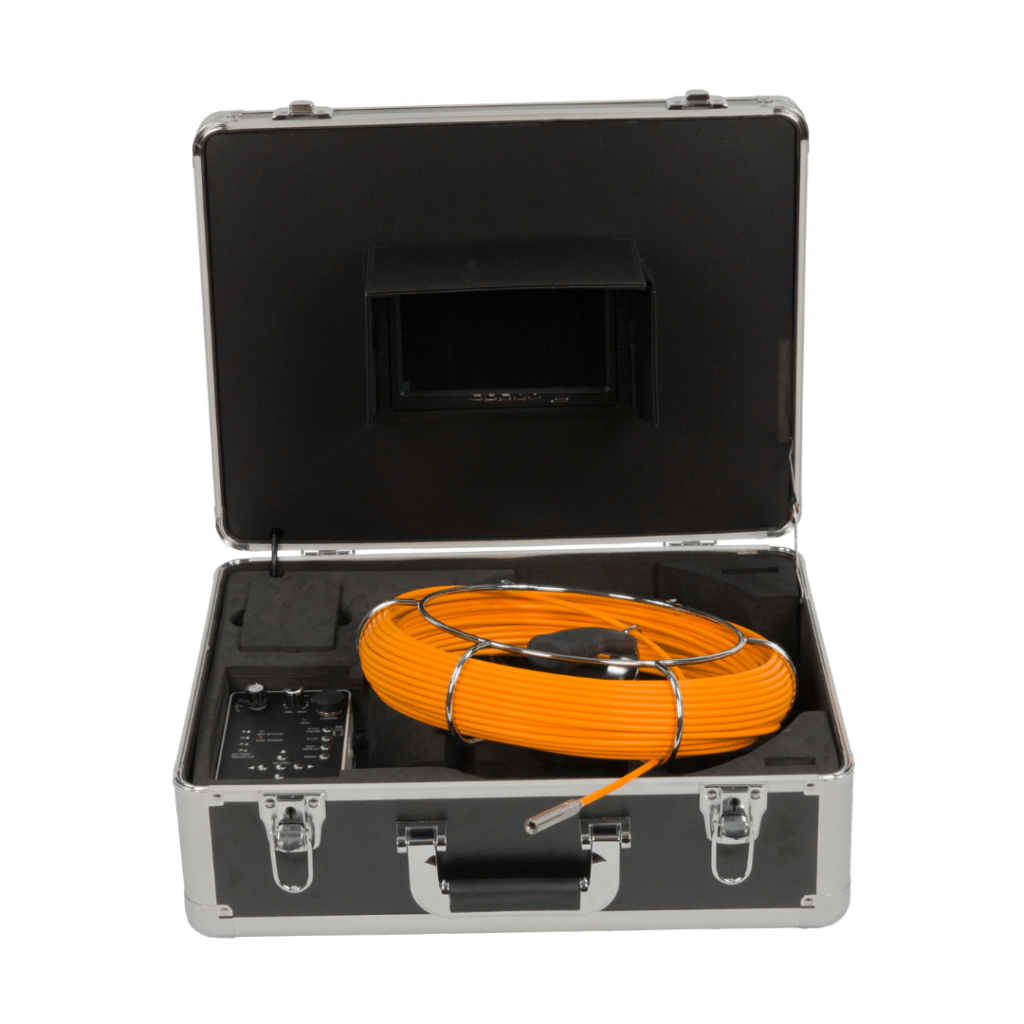
This is where things get genuinely interesting. At this sewer camera price range, you’re moving into gear that real plumbers use for everyday residential work, particularly smaller operations or one-person shops who don’t want to shell out for a full commercial camera for inspection system just yet.
A sewer inspection camera in this category typically includes: –
- Self-leveling heads, a huge deal, your footage actually stays right-side up.
- Better image sensors, you can spot hairline cracks and joint separations clearly.
- 50 to 100 feet of push cable, handling most residential sewer lines comfortably.
- A built-in footage counter so you know exactly how far in the camera is.
- Dedicated monitors with video recording capability.
Brands like PipeVision Tech., RIDGID and several mid-tier manufacturers offer solid cameras for inspection work here. PipeVision’s SeeSnake Compact is one of the most recognized names in this sewer camera price bracket.
Where this sewer camera shines: –
- Residential drain and sewer inspections on standard 3-inch and 4-inch lines.
- Pre-purchase home inspections where buyers want to know the condition of the sewer line.
- Locating root intrusion, pipe offsets, and damage in typical residential sewer lines.
- Recording video evidence to share with homeowners or insurance adjusters.
Where sewer camera cost at this level still limits you: –
- Most systems still lack a built-in locating sonde, or offer only basic add-on locating.
- Larger 6-inch commercial lines are difficult to navigate.
- Build quality, while decent, isn’t designed for brutal daily high-volume use.
If you’re a light-use contractor doing sewer camera inspection work a few times a week, this tier offers a solid return without the steep sewer inspection camera cost of professional systems.
$2,000–$8,000- Professional Sewer Camera Price Range
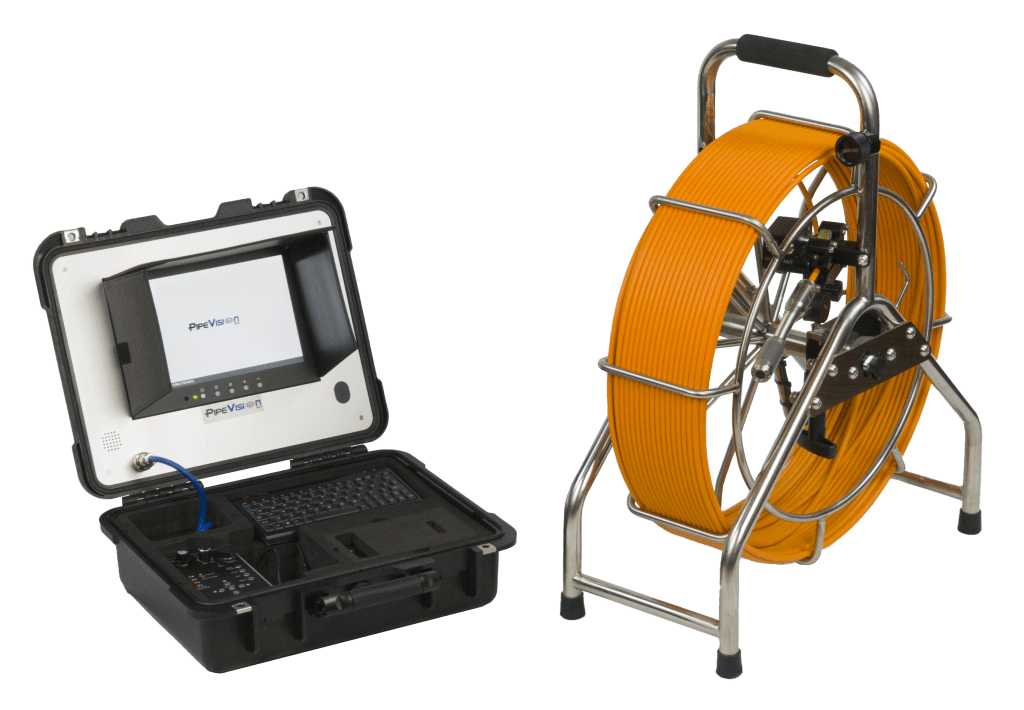
This is the sweet spot for serious plumbing contractors who run sewer inspections as a regular revenue stream. At this sewer camera cost level, you’re paying for durability, reliability, and features that separate amateur setups from professional ones.
A sewer inspection camera in this range typically delivers: –
- Integrated sonde transmitter in the camera head, combine this with a locator and you can pinpoint exactly where underground the problem is, and at what depth
- High-resolution video, some cameras for inspection work hit 720p or 1080p, clear enough to confidently show a homeowner what you’re seeing in real time
- 100 to 200 feet of professional push cable for handling longer residential and light commercial sewer lines
- Rugged, job-site-grade housing built to last
- Accessories like skip wheels for larger diameter pipes
- Reporting software for generating professional sewer inspection camera reports with screenshots
Brands like PipeVision’s Pipe Cameras compete hard in this sewer camera price range. These are systems that contractors trust daily.
Who this sewer camera is built for:- A plumbing contractor or home inspection company running sewer camera inspections multiple times per week. The ROI math works fast, a single residential sewer inspection job typically earns $250–$500, so a $5,000 sewer inspection camera pays for itself after roughly 15–20 jobs. That’s a compelling argument for upgrading from a cheaper camera for inspection work.
$8,000–$20,000- Advanced Commercial Sewer Camera Cost
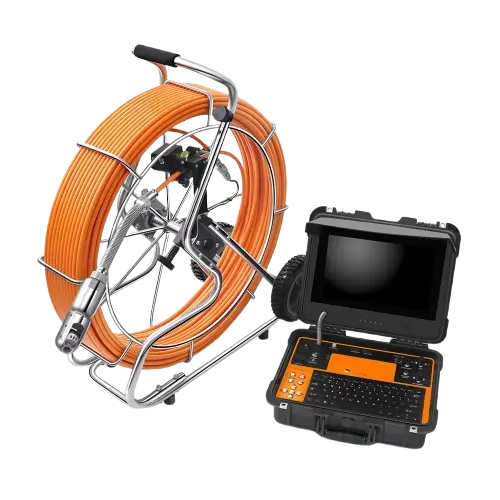
Here’s where the technology takes a real leap. Sewer camera systems in this price range are purpose-built for larger pipe diameters, heavier usage, and situations where detailed professional documentation is non-negotiable, think municipal contracts, large commercial buildings, insurance claim documentation, or pre-sale inspections on multi-family properties.
Features that justify the higher sewer camera price: –
- Pan-and-tilt camera heads, the sewer inspection camera rotates in two directions, letting you examine the full pipe wall from any angle
- Higher resolution video, sometimes 4K
- Extended push cable, 300+ feet of reach for serious commercial sewer lines
- Advanced reporting software using NASSCO PACP defect coding standards, the professional language of pipeline inspection
- Robust powered cable management systems
- Multiple interchangeable camera head sizes to handle a wide range of pipe diameters
Some camera for inspection systems at this level are semi-motorized, meaning the cable feeds automatically rather than being pushed by hand, a big deal on long runs.
Who needs this sewer camera cost level: Commercial plumbers, dedicated pipeline inspection specialists, municipal sewer contractors, environmental assessment firms. This isn’t a residential tool, it’s a serious capital investment in inspection capability.
$20,000+ Full Robotic Crawler Sewer Inspection Camera Systems

This is the top end of the sewer camera price spectrum, built almost exclusively for municipal and large-scale industrial pipeline inspection. Instead of a push cable with a camera for inspection attached, you’re deploying a self-propelled crawler, a small robotic vehicle that drives itself through the pipe, transmitting live HD footage back to an operator.
These sewer inspection camera systems can inspect pipes 8 inches and larger, some handle up to 48 inches, and often integrate directly with GIS mapping software. Crawler inspection footage is what city engineers use to grade sewer infrastructure, plan capital rehabilitation projects, and justify budget requests.
Sewer camera cost at this level is rarely a solo purchase. Most of the work here is done by specialized pipeline inspection companies with trained crews and dedicated vehicles. If you’re a general contractor wondering whether you need one, you almost certainly don’t. If you’re a municipality or utility evaluating options, you’re likely already talking to vendors directly.
What Actually Drives Sewer Camera Cost
Understanding why sewer camera price varies so dramatically comes down to a few core factors:
Cable length and build quality- More cable, better cable, higher sewer camera cost. Professional push cable is engineered to resist kinking under pressure and accurately transmit the camera head’s signal over long distances.
Camera head features- Self-leveling, image resolution, integrated sonde for locating, each feature added to a sewer inspection camera head adds to the manufacturing cost and the final price.
System durability- A sewer camera that gets used a couple of times a year doesn’t need the same construction as a camera for inspection work running through pipes 300 days a year.
Reporting software- The ability to generate professional sewer inspection camera reports, annotate footage, and export findings in standard formats adds real business value, and real development cost that shows up in the sewer camera price.
Brand support and warranty- Established brands like RIDGID and Spartan offer North American service networks. A cheaper off-brand sewer camera might save you money upfront but can leave you without a working camera for inspection during your busiest season.
Common Questions About Sewer Camera Cost
How much does a sewer camera inspection cost if I hire a plumber?
Hiring a professional for a residential sewer camera inspection typically costs $250–$500 depending on your location, line length, and the depth of the inspection report provided.
What is the best sewer camera for the money under $1,000?
For homeowners and light users, brands like PipeVision Tech. or RIDGID offer the best balance of sewer camera cost vs. image quality, cable length, and durability.
Is buying a sewer inspection camera worth it for a small plumbing business?
Yes, if you’re running three or more sewer camera inspection jobs per week, owning your camera for inspection work pays for itself in months and adds a professional service line to your business.
What’s the difference between a sewer camera and a drain camera?
The terms are often used interchangeably. Technically, a drain camera tends to refer to smaller, shorter-reach units for indoor drains, while a sewer camera typically refers to longer-reach systems designed for underground sewer line inspection. Sewer camera cost is generally higher due to the added cable length and durability requirements.
Bottom Line: Matching Sewer Camera Price to Your Actual Needs
If you’re a homeowner: a sewer camera UBER $1,000 range handles occasional diagnostic checks comfortably.
If you’re a plumbing contractor running regular sewer camera inspection jobs: invest in the $2,000–$8,000 sewer camera price range. The image quality, locating capability, and durability will return your investment faster than most other equipment purchases.
If you’re doing commercial or municipal sewer inspection camera work: budget $8,000 and up, talk to manufacturers directly, and consider renting before committing to a purchase.
Whatever level you’re working at, don’t cut corners on the tool that lets you see inside the pipe before you start making expensive decisions. A good sewer camera, at the right sewer camera cost for your needs, pays for itself over and over.