Blog, Blogs, Uncategorised
Waterproof Inspection Camera: IP Ratings Explained
May
If you’ve spent any time shopping for a sewer camera, you’ve seen IP ratings plastered across product listings – IP67, IP68, IP69K. Every manufacturer uses them. Almost nobody explains what they actually mean in practice, how they differ from one another, or why the rating on a waterproof inspection camera matters far more than most buyers realize before their first camera floods out mid-inspection.
This guide breaks down the IP rating system from the ground up, explains exactly what each protection level means for a camera for inspection working in drains and sewers, and helps you understand why IP68 sewer cameras have become the professional standard – and when other ratings are and aren’t sufficient.
By the time you’re done reading, you’ll know how to evaluate any waterproof inspection camera claim on its merits rather than its marketing language.
What Is an IP Rating and Why Does It Matter for a Sewer Camera?

IP stands for Ingress Protection. It’s an international standard – defined by IEC 60529 – that classifies how well an enclosure protects its internal components against the intrusion of solid particles and liquids. The standard gives manufacturers and buyers a shared language for comparing protection levels without relying on vague terms like “waterproof” or “water resistant,” which mean nothing without context.
An IP rating is always written as two digits after the letters IP. The first digit covers protection against solid particles like dust and debris. The second digit covers protection against water and liquids. So when you see IP68 on a sewer camera, the 6 refers to dust protection and the 8 refers to water protection.
For a camera for inspection working inside active drain and sewer lines, the water protection digit is the one that matters most – but understanding what each level means reveals why some waterproof inspection camera claims hold up under real working conditions and others don’t.
Breaking Down the IP Rating Scale for Inspection Cameras
The First Digit: Solid Particle Protection
The solid particle scale runs from 0 to 6. For any sewer camera operating in real drainage environments, you want a 6, which means the housing is fully dust-tight. No dust ingress permitted under any conditions, tested under vacuum.
Sewer lines carry grit, sand, sediment, and fine debris suspended in water. A camera for inspection that isn’t fully dust and particle protected will, over time, allow abrasive material to work its way into seals and connectors, accelerating wear and leading to premature failure. A first digit of 6 is the baseline requirement for any serious drain camera waterproof claim.
The Second Digit: Water Protection, What Each Level Actually Means
This is where the meaningful differences between waterproof inspection camera ratings show up. The water protection scale runs from 0 to 9, and the gap between ratings isn’t just numerical — it represents fundamentally different use conditions.
- IPX1 – IPX3: Protection against dripping or spraying water at various angles. Completely inadequate for any sewer camera application. A light rain shower would exceed these specs.
- IPX4: Protection against water splashing from any direction. Still not appropriate for submersion. A drain camera waterproof at IPX4 would fail the moment it enters standing water.
- IPX5 – IPX6: Protection against water jets. Useful for washdown environments but not submersion. Some budget waterproof inspection camera products are rated here, which sounds impressive until the camera head goes underwater.
- IPX7: Protection against temporary immersion up to 1 meter for 30 minutes. This is the entry point for genuine submersion protection and is adequate for many residential drain inspection scenarios where water depth is limited.
- IPX8: Protection against continuous immersion beyond 1 meter, at depths and durations specified by the manufacturer. This is the IP68 sewer camera standard, the professional benchmark for drain and sewer inspection work.
- IPX9K: Protection against high-pressure, high-temperature water jets. Relevant for industrial cleaning environments rather than standard camera for inspection deployment.
Why IP68 Sewer Cameras Are the Professional Standard
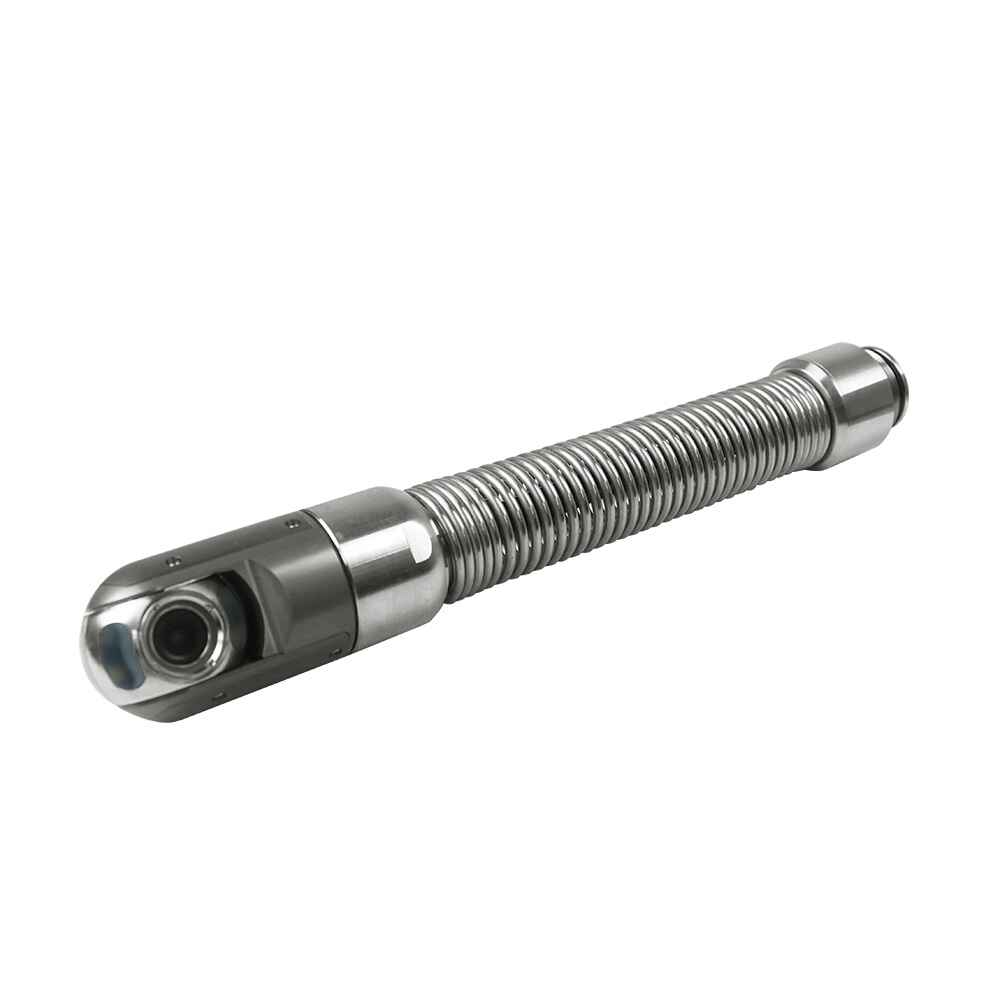
The sewer camera industry has converged on IP68 as the baseline for professional-grade waterproof inspection camera equipment, and there are clear practical reasons why.
Drain and sewer lines are not predictable environments. A residential lateral that looks clear on camera can have standing water around a bend. A stormwater line that was dry on the last inspection can be partially flooded on the next visit depending on recent rainfall. A blocked municipal main can be backed up to a depth that nobody anticipated from the surface. Any camera for inspection that can only handle temporary, shallow immersion is one job away from an expensive failure.
An IP68 sewer camera is rated for continuous submersion. The manufacturer specifies the exact depth and duration, a common professional spec is IP68 rated to 10 meters continuous, which means the camera head can operate fully submerged in typical sewer depths without any risk of water ingress. For a camera that may spend hours in a partially flooded line over its working lifetime, that protection level is what separates reliable professional equipment from equipment that will eventually let you down.
What the IP68 Rating Covers on a Sewer Camera System
It’s worth understanding that an IP68 sewer camera rating typically applies specifically to the camera head and housing, the component that actually enters the pipe. The full system includes the cable, the reel, and the display unit, each of which may have its own protection rating or none at all.
When evaluating a waterproof inspection camera, ask for the IP rating of each component separately:
- Camera head: Should be IP68 for any professional sewer camera application.
- Cable and connectors: Cable jacket should be rated for continuous submersion. Connector points are common failure sites, check that they’re sealed to at least IP67.
- Display monitor: Usually rated separately, often to a lower standard like IP54 or IP65 since it’s operated above ground. Some portable drain camera waterproof monitor units are rated to IP67 for outdoor and wet-weather operation.
- Reel housing: Typically not submersion-rated but should have weather resistance for outdoor use. Check that cable entry and exit points on the reel are properly sealed.
IP68 Depth Ratings Vary – Read the Fine Print
IP68 is not a single fixed specification, it’s a minimum standard with manufacturer-defined depth and duration parameters. One IP68 sewer camera might be rated for 1.5 meters for 30 minutes. Another might be rated for 10 meters continuous. Both legitimately carry the IP68 designation.
For most residential drain camera waterproof applications, 1.5 to 3 meters is more than sufficient, typical residential sewer laterals don’t run at those depths. For municipal or commercial inspection work on deeper infrastructure, make sure the IP68 sewer camera you’re evaluating specifies a depth rating that covers your actual working conditions. Don’t assume all IP68 ratings are equal.
IP67 vs IP68: Does the Difference Matter for Drain Camera Work?
IP67 and IP68 are often discussed interchangeably in waterproof inspection camera marketing, and for many residential applications the practical difference is small. Both ratings cover full submersion. The distinction is that IP67 covers temporary immersion to 1 meter for up to 30 minutes, while IP68 covers deeper and/or longer submersion as defined by the manufacturer.
For a lightweight residential drain camera waterproof rated to IP67, operating in 3-inch to 4-inch household drain lines where water depth rarely exceeds a few inches, the rating is likely adequate. The camera head is going to be in contact with water, not submerged under sustained pressure at depth.
Where IP68 becomes clearly important is in commercial and municipal sewer camera work, larger diameter lines, deeper infrastructure, partially flooded mains, and applications where the camera for inspection may sit submerged for extended periods. In those conditions, a genuine IP68 sewer camera rated to 5 or 10 meters provides a meaningful margin of protection that IP67 doesn’t offer.
The conservative professional approach: buy IP68 regardless of the application. The cost difference between an IP67 and IP68 waterproof inspection camera at the same performance level is rarely significant enough to justify the lower protection ceiling.
Red Flags in Waterproof Inspection Camera Claims
Not every waterproof inspection camera on the market is as protected as its marketing suggests. Here are the warning signs to watch for.
“Waterproof” With No IP Rating Listed
If a drain camera waterproof listing doesn’t include a specific IP rating, that’s a significant red flag. “Waterproof” is a marketing term with no standardized definition. It could mean the housing survived a splash test during QA, or it could mean nothing at all. Any genuine waterproof inspection camera intended for professional use will list its IP rating clearly.
IP Rating Listed Only for the Camera Head
A sewer camera system is only as waterproof as its weakest point. If a product page lists an IP68 rating for the camera head but doesn’t mention the cable connectors or reel housing, ask specifically about those components. Water ingress through an unsealed connector on an otherwise IP68 sewer camera is a real and common failure mode.
No Depth or Duration Spec With the IP68 Claim
As noted above, IP68 allows manufacturers to set their own depth and duration parameters. A waterproof inspection camera listed as IP68 with no further specification may be rated to the minimum, 1 meter for 30 minutes. For most residential sewer camera work this is fine, but it’s worth knowing what you’re actually buying.
Cheap Seals and Visible Cost-Cutting on Critical Points
Physical inspection of a waterproof inspection camera before purchase can reveal a lot. Look at the connector points, the seal around the lens housing, and the quality of the cable jacket. Thin rubber seals, poorly finished connector housings, and flimsy cable jackets are signs that the drain camera waterproof rating may have been achieved under lab conditions that don’t reflect sustained field use. IP ratings are tested once at the factory, they don’t account for seal degradation over time and repeated thermal cycling in real sewer environments.
Maintaining the IP Rating of Your Sewer Camera Over Time
An IP68 sewer camera doesn’t stay IP68 forever without some attention. Seals degrade. Connectors get damaged. Cable jackets develop micro-cracks from repeated flexing. The physical protection level of your waterproof inspection camera at year three isn’t the same as it was on day one, and most operators find this out when water gets in somewhere it shouldn’t.
- Inspect camera head seals regularly: Look for any deformation, cracking, or compression set in the O-rings and seals around the lens housing. Replace them at the first sign of wear, this is cheap preventive maintenance that protects an expensive component.
- Check connector condition before every job: Bent pins, corroded contacts, and damaged connector housings are the most common failure points on an otherwise well-maintained drain camera waterproof system. A quick visual check before deployment takes seconds and can prevent a mid-job failure.
- Rinse and dry after every use: Sewer water is chemically aggressive. Rinsing the camera head, cable, and connectors after each inspection removes residue that accelerates seal degradation and connector corrosion over time.
Store properly: Don’t coil the cable tighter than its minimum bend radius. Tight coiling stresses the cable jacket and can create the micro-fractures that lead to water ingress over time, compromising the drain camera waterproof performance of the cable even if the camera head seals remain intact.
The Bottom Line on IP Ratings for Drain and Sewer Cameras
IP ratings exist because “waterproof” means nothing without a standard behind it. For a camera for inspection working in active drains and sewer lines, understanding those ratings isn’t a technical exercise, it’s the difference between equipment that performs reliably in unpredictable wet environments and equipment that fails when you need it most.
The professional benchmark is clear: a genuine IP68 sewer camera with a defined depth rating, fully sealed connectors, and a well-constructed cable jacket. For residential drain camera waterproof applications, IP67 is workable. For anything commercial, municipal, or in conditions where water depth or submersion duration is uncertain, IP68 is the only specification worth buying.
Don’t let the marketing language substitute for the numbers. Ask for the IP rating. Ask for the depth spec. Ask what components the rating applies to. Any supplier selling a quality waterproof inspection camera will answer those questions without hesitation.
Browse our full range of IP68 sewer cameras and waterproof inspection camera systems, with full specification sheets so you know exactly what protection level you’re getting before you buy.