Blog, Blogs, Uncategorised
Cable Types Explained: Push Rod vs Flex vs Steel Braid
Jun
Ask most operators what makes a great sewer camera, and they’ll talk about resolution, monitor size, or IP rating. Rarely does the cable come up first. That’s understandable, it’s not the most exciting part of the system, but it’s one of the decisions that shapes day-to-day performance more than almost anything else.
The sewer camera cable is what actually enters the pipe. It’s what carries the camera head around bends, through debris, and back out again. The type of cable determines how far the system can reach, what pipe configurations it can navigate, how long it lasts under daily use, and how much physical effort the operator puts into every single job.
Push rod, flex, and steel braid are the three main cable types found in professional sewer camera systems today. Each has a distinct construction, a distinct behavior in the pipe, and a distinct set of conditions where it performs best. This guide explains how each one works and helps you figure out which cable type fits the camera for inspection work you actually do.
Why the Sewer Camera Cable Type Matters
A sewer camera is sold as a complete system, but the cable is often treated as an afterthought in the buying process. Buyers compare camera heads and monitors, then accept whatever cable the system ships with. That approach works fine until the cable becomes a problem, and with enough field use, cable problems are almost inevitable if the wrong type was chosen for the application.
The wrong sewer camera cable type can limit reach in long straight runs, cause the camera head to lose orientation in bends, tire out the operator on high-volume inspection days, or wear out prematurely from conditions it wasn’t designed to handle. Cable replacement isn’t cheap, and downtime while waiting for a new one isn’t either.
The right choice, push rod camera cable, flex cable, or steel braid, isn’t universal. It depends on what you’re inspecting, how often, and what the lines look like. Here’s how each one breaks down.
Push Rod Camera Cable: Stiff, Direct, and Built for Straight Runs

The push rod camera is the oldest and most straightforward sewer camera cable design. A push rod is a semi-rigid cable, stiffer than flex cable, more resistant to compression, that transmits the operator’s pushing force directly to the camera head. You push the rod, the camera moves forward. It’s mechanical and intuitive.
The stiffness that defines a push rod camera cable is both its strength and its limitation. In straight or gently curving pipe runs, that stiffness means excellent pushability, the operator can feel resistance at the camera head, navigate around partial blockages, and drive the camera to the end of long runs without the cable buckling or looping inside the pipe. A pipe inspection push rod excels in these conditions.
Where Push Rod Camera Cable Performs Best
- Long straight runs: The rigidity of a pipe inspection push rod transmits pushing force efficiently along the cable length, making it possible to drive the camera head significantly further in straight pipe than a flex cable of the same diameter would allow.
- Partial blockages: When the camera for inspection needs to push through soft obstructions, grease buildup, loose debris, minor root strands, the push rod camera cable’s stiffness gives the operator meaningful control and tactile feedback.
- Larger diameter pipes: In 4-inch and above pipe, a push rod camera cable has enough room to flex slightly at bends without the buckling risk that occurs in tighter lines. Push rod systems are a natural fit for 4-inch to 10-inch residential and light commercial sewer camera work.
- High-volume residential inspection: Push rod camera systems are typically the most affordable and most portable option, making them a workhorse choice for plumbers doing multiple residential sewer camera inspections per day.
Where Push Rod Camera Cable Falls Short
- Tight bends and multiple direction changes: The stiffness that makes a pipe inspection push rod strong in straight runs becomes a liability in complex pipe layouts with multiple 90-degree bends in close succession. The cable resists bending, which increases friction at each change of direction and eventually limits how far the operator can push.
- Small diameter pipes: In 1.5-inch to 3-inch lines, a stiff push rod camera cable may have difficulty navigating tight radius bends without the cable binding or the camera head losing forward momentum.
- Camera head rotation: Push rod cables can twist under repeated use, which causes the camera head image to rotate. Some pipe inspection push rod systems include a self-leveling camera head to compensate, but it’s a known limitation of the cable type.
Flex Cable: Maximum Maneuverability
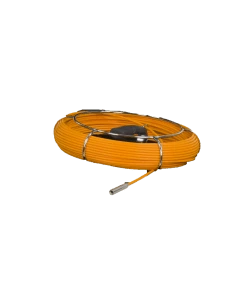
Flex cable – sometimes called soft cable or spiral-wound flex cable, is constructed differently from a push rod camera cable. Where a push rod relies on semi-rigid compression strength, flex cable uses a more supple design that allows it to bend through tight radius turns with significantly less resistance.
The result is a sewer camera cable that navigates complex pipe configurations, multiple bends, p-traps, sweeping elbows, that would stop a push rod camera in its tracks. The trade-off is that flex cable transmits pushing force less efficiently over long distances, meaning it covers less straight-line reach before the cable begins to loop or coil inside the pipe rather than advancing the camera head forward.
Where Flex Cable Performs Best
- Small diameter pipes: Flex cable is the natural choice for 1.5-inch to 3-inch drain lines where tight radius bends are common and the pipe interior gives a stiff push rod camera cable nowhere to flex without binding. For a camera for inspection in household drain lines under the kitchen sink or bathroom vanity, flex cable is the right tool.
- Complex building drain layouts: Commercial buildings, older residential properties with multiple pipe direction changes, and any system with p-traps or tight 90-degree bends close together are ideal flex cable territory. Where a pipe inspection push rod would stall, flex cable keeps moving.
- Shorter inspection runs: Because flex cable has lower compression strength over long distances, it’s best suited for runs under 30 to 40 meters where the reduced pushability doesn’t become a limiting factor.
Where Flex Cable Falls Short
- Long straight municipal runs: A flex sewer camera cable in a 60-meter straight main will start to spiral and coil inside the pipe well before reaching the end, limiting the effective range compared to a push rod camera cable of the same length.
- Pushing through blockages: Flex cable has less ability to apply direct forward force against a blockage. Where a pipe inspection push rod can muscle through soft debris, flex cable tends to deflect or buckle under the same resistance.
- Wear rate: The more supple construction of flex cable typically makes it more susceptible to abrasion wear in rough-bore pipe materials like corrugated metal or deteriorating clay tile, compared to the more robust construction of steel braid cable.
Steel Braid Cable: Heavy-Duty Protection for Demanding Sewer Camera Work
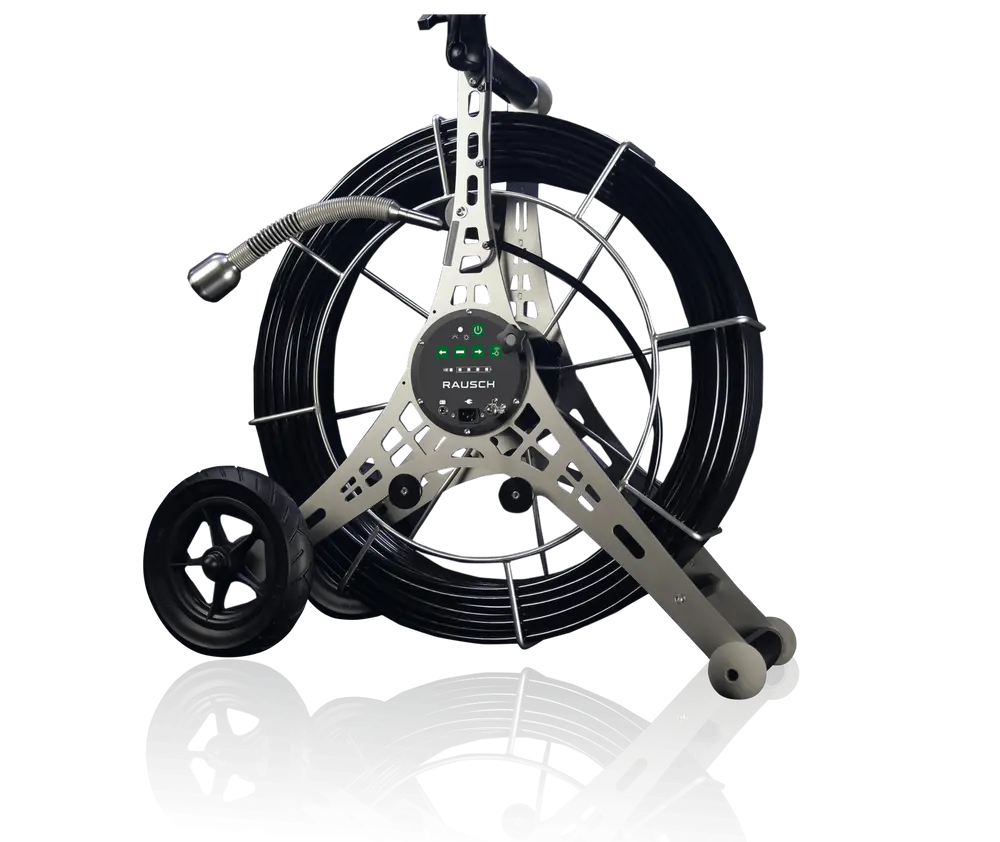
Steel braid sewer camera cable takes a different approach to durability. The signal and power conductors inside the cable are wrapped in a braided stainless steel jacket, which provides exceptional protection against abrasion, crushing, and the kind of mechanical stress that comes from heavy commercial and municipal inspection work.
Steel braid cable is heavier than both push rod and flex cable at equivalent lengths. It’s also stiffer than flex cable, which gives it better pushability in larger diameter pipes, but it shares some of the bend-resistance limitations of a push rod camera cable in tight configurations. The defining characteristic is its toughness, steel braid cable is designed for high-cycle professional use where cable longevity under abuse is the priority.
Where Steel Braid Cable Performs Best
- Municipal and large-diameter inspection: Steel braid sewer camera cable is the standard for professional-grade camera for inspection systems working in 6-inch and above municipal infrastructure. The cable’s compression strength and abrasion resistance match the demands of larger pipe environments.
- High-frequency commercial inspection: Operations that run their sewer camera multiple times per day, five or more days a week, in rough or abrasive pipe materials benefit most from steel braid’s durability advantage. The higher upfront cost pays for itself in extended cable life.
- Rough or deteriorating pipe materials: Corrugated metal drain pipe, deteriorated clay tile with exposed aggregate, and old cast iron with heavy corrosion pitting put significant abrasive wear on any sewer camera cable. Steel braid handles these conditions better than either push rod or flex cable alternatives.
- Long cable runs with heavy camera heads: Larger pan-and-tilt camera heads and longer cable lengths place more mechanical stress on the cable at connection points and under sustained tension. Steel braid construction handles this loading more reliably than lighter cable types.
Where Steel Braid Cable Falls Short
- Weight and handling: Steel braid sewer camera cable is noticeably heavier than push rod or flex alternatives. On high-volume residential inspection days, that weight adds up over the course of multiple jobs and can fatigue operators more quickly.
- Small diameter pipes: The heavier, stiffer construction of steel braid cable makes it less suitable for 3-inch and smaller pipe runs where a flex cable or lighter push rod camera cable would navigate more easily.
- Cost: Steel braid cable commands a premium over other cable types. For residential-focused operators who don’t need the additional durability, that premium isn’t always justified.
Push Rod vs Flex vs Steel Braid: Quick Comparison
Here’s a straightforward summary to help match the right sewer camera cable type to your specific work:
- Push Rod Camera Cable – Best for: 4-inch to 10-inch residential and commercial sewer lines, long straight runs, high-volume residential inspection. Limitations: complex bends, small diameter pipe.
- Flex Cable – Best for: Small diameter drain lines 1.5 to 3 inches, complex layouts with multiple bends, short to medium runs. Limitations: long straight runs, pushing through blockages.
- Steel Braid Cable – Best for: Municipal and large-diameter sewer camera work, high-frequency commercial use, rough or abrasive pipe materials. Limitations: weight, small pipe navigation, cost.
Extending the Life of Any Sewer Camera Cable
Regardless of which cable type your camera for inspection uses, the same maintenance principles apply, and they make a meaningful difference in how long your cable lasts before it needs replacing.
- Never exceed the minimum bend radius: Every sewer camera cable has a minimum bend radius specification. Coiling tighter than that, whether in storage, on the reel, or during deployment, creates stress points that eventually cause conductor failure or jacket cracking.
- Rinse after every use: Sewer water is chemically corrosive to cable jackets and connectors. A quick rinse with clean water after each push rod camera or flex cable inspection removes residue before it starts degrading the outer jacket material.
- Inspect the last meter of cable regularly: The section closest to the camera head takes the most punishment, it flexes the most, contacts the pipe wall the most, and is subject to the most abrasion. Check this section for jacket wear, kinks, or stiffness changes that might indicate internal conductor damage.
- Apply cable lubricant on long runs: For pipe inspection push rod work in longer runs, a light application of cable lubricant at the entry point reduces friction, makes the cable easier to advance and retrieve, and reduces jacket wear from repeated contact with the pipe wall.
The Right Sewer Camera Cable for the Right Job
There isn’t a single best sewer camera cable type, there’s the right cable for what you’re inspecting. A push rod camera is the workhorse of residential and commercial sewer camera work in standard drain lines. Flex cable opens up the small-diameter and complex-layout inspections that a push rod can’t reach. Steel braid is built for the operators who need their camera for inspection to survive daily punishment in demanding professional environments.
Matching the cable to the application isn’t just a performance decision, it’s an economic one. The right sewer camera cable lasts longer, requires less operator effort, and produces better inspection results than a mismatched cable pushed beyond its design parameters.
Browse our full range of sewer camera systems by cable type, push rod camera, flex, and steel braid, and find the right fit for your inspection work.