Blog, Blogs, Uncategorised
Self-Leveling Sewer Cameras: Are They Worth It?

Jul
A rotated image is one of those sewer camera problems that sounds minor until you’re actually staring at it on a job site. The camera head rolls as the pipe bends, the footage tilts sideways, and what should be a clear view of the pipe wall becomes a disorienting angle that makes it genuinely hard to tell a lateral crack from a shadow. If you’ve done any real volume of inspection work, you’ve dealt with this at least once, probably more than that.
Self leveling sewer cameras were designed to solve exactly that problem. They use a motorized mechanism inside the camera head to keep the image upright regardless of how the cable twists or how sharply the pipe bends, giving the operator a consistently oriented picture from entry to the far end of the run. The technology has been in commercial-grade equipment for years, and it’s increasingly appearing in mid-range systems as the manufacturing cost has come down.
The question most buyers are actually asking isn’t whether the technology works, it does. The real question is whether a self leveling sewer camera is worth the premium over a standard system for their specific type of work. And the honest answer is that it depends far more on what you’re inspecting and who’s reviewing the footage than on any particular spec.
How a Self-Leveling Pipe Camera Actually Works
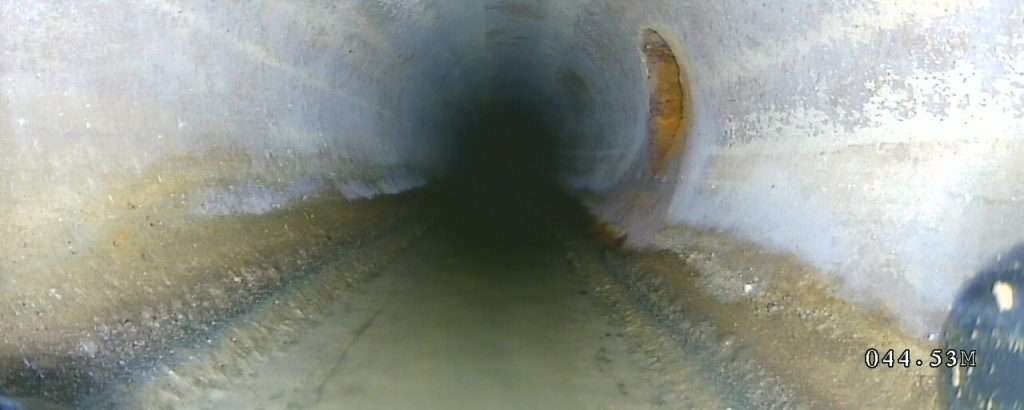
Understanding what goes on inside a self-leveling pipe camera makes the buying decision a lot clearer.
In a standard sewer camera, the camera module is fixed rigidly inside the head housing. Any twist that travels up the cable, from the operator feeding it through bends, from the reel winding under tension, from the pipe geometry itself, gets transmitted directly to the camera head. The image rotates accordingly. In a short, straight run this is barely noticeable. In a 60-meter commercial run through multiple direction changes, that twist can accumulate to the point where the footage is rotated 90 degrees or more from level.
A self leveling sewer camera uses a gyroscopic sensor inside the camera head to detect rotation away from level, paired with a small motor that corrects for it in real time. The camera module effectively floats inside the housing, held upright by the leveling mechanism while the outer housing and cable twist freely around it. The operator sees a level image regardless of what the cable is doing.
That mechanism adds complexity, weight, and cost to the camera head, which is why self-leveling pipe camera systems have historically been reserved for higher-end commercial equipment. The feature is more accessible now than it was five years ago, but a genuine quality self leveling sewer camera still carries a meaningful price premium over an otherwise comparable fixed-head system.
The Problems a Self Leveling Sewer Camera Actually Solves

Being specific about which problems self-leveling pipe camera technology addresses helps cut through the feature marketing and figure out whether those problems are ones you’re actually dealing with.
Documentation Quality and Client-Facing Professionalism
This is the single strongest argument for a self leveling sewer camera in professional inspection work. When footage goes to a homeowner, a real estate buyer, a structural engineer, or a municipal infrastructure team, a level and consistently oriented image reads as professional and is significantly easier for a non-expert to interpret. Rotated footage, even when perfectly readable to an experienced operator, raises questions with clients who don’t know what they’re looking at.
Beyond optics, a level image from a self-leveling pipe camera makes defect documentation more reliable. A crack at the 3 o’clock position in a pipe should appear at 3 o’clock in the report. If the camera has rotated 60 degrees, that same crack appears at a completely different position in the frame, which creates confusion when comparing footage across multiple inspections of the same line, and can lead to genuine miscommunication about where a defect is located. A self leveling sewer camera removes that variable entirely.
Operator Fatigue Over a Full Inspection Day
Experienced operators develop the ability to mentally compensate for camera rotation, they read pipe geometry and know which way is actually down even when the image is tilted. That’s a learned skill, and on any single inspection it’s a small cognitive load. Across a full day of running a sewer camera through multiple jobs, though, it accumulates. Operators who move to a self-leveling pipe camera consistently describe footage as less tiring to monitor, not because the individual inspection is dramatically different, but because that constant low-level mental correction is no longer happening.
Getting New Technicians Up to Speed Faster
Reading rotated sewer camera footage accurately takes experience. For operations bringing on new inspection technicians, a self leveling sewer camera meaningfully shortens the learning curve. New operators can focus immediately on identifying what they’re seeing in the pipe rather than spending months developing the ability to correctly interpret a tilted image. For growing inspection businesses, that faster path to independent productivity has real value.
Long Runs with Multiple Direction Changes
Cable twist gets worse with distance and with each change of direction. A self-leveling pipe camera’s advantage is minimal on a 20-meter residential lateral with a single gentle bend. On a 80-meter commercial run through multiple 45-degree and 90-degree direction changes, the cumulative twist on a standard sewer camera can make footage difficult to use without active mental correction on every frame. This is where the self leveling sewer camera earns its premium most consistently, long, complex runs where rotation would otherwise be a real problem.
When a Self-Leveling Pipe Camera Is Probably Not Worth the Premium
The case against paying more for a self leveling sewer camera is equally straightforward: if image rotation isn’t a meaningful problem in the work you actually do, the feature isn’t solving a problem you have.
Short Residential Drain Work
For a plumber running a sewer camera through residential drain lines, 3-inch to 4-inch pipe, runs under 30 meters, mostly straight with a bend or two, cable twist is genuinely minimal and image rotation rarely becomes a serious issue. The operator quickly develops a feel for pipe orientation, the footage stays reasonably level on its own, and the self-leveling pipe camera premium is hard to justify against the actual operational benefit in those conditions.
Locating and Clearing Blockages vs. Documenting Defects
There’s a meaningful difference between using a camera for inspection to find a blockage and confirm it’s been cleared versus producing a detailed pipe condition report. When the goal is operational, find it, fix it, confirm it, a rotated image doesn’t significantly impair the task. The self leveling sewer camera advantage is most pronounced when the footage has a life beyond the job site: when it’s being reviewed, filed, or delivered to a third party.
When Overall System Quality Matters More Than One Feature
A self leveling sewer camera with a smaller camera head, weaker LED array, and shorter cable range isn’t automatically a better tool than a fixed-head camera for inspection with superior optics, stronger lighting, and greater reach at the same price point. If you’re working within a fixed budget and choosing between self-leveling and a meaningfully better overall system, the overall system quality often delivers more practical inspection performance than the leveling feature alone. Know what’s actually limiting your work before deciding what to upgrade.
Who Gets the Most Value from a Self Leveling Sewer Camera
The self-leveling pipe camera premium pays off most reliably for specific operator profiles. If your work matches one or more of these, the feature deserves serious weight in your buying decision.
- Pre-sale and real estate inspection specialists: The footage is going to be reviewed by buyers, agents, and potentially lawyers. A consistently level, professional video from a self leveling sewer camera carries more credibility and prompts fewer questions about whether a defect is real or a camera artifact.
- Municipal and commercial infrastructure operators: Long runs, large-diameter mains, complex pipe layouts, and formal reporting requirements are precisely the conditions where a self-leveling pipe camera delivers consistent value. Defect clock positions need to be accurately recorded, and that accuracy depends on a level image.
- Operators producing formal CCTV inspection reports: NASSCO PACP coding and similar structured pipeline assessment standards require accurate defect positioning. A self leveling sewer camera makes that positioning inherently more reliable without the operator needing to manually track and correct for rotation during footage review.
- Growing businesses training new inspection technicians: The faster a new operator produces reliable, professional footage, the faster they’re generating revenue independently. A self-leveling pipe camera removes a significant skill barrier and shortens the productive ramp-up period.
- High-volume operators on long commercial runs daily: Across dozens of inspections a week on complex commercial pipe layouts, the compound benefit of not managing image rotation, in operator attention, footage review time, and documentation accuracy, adds up to real and measurable productivity gains.
What to Evaluate When Buying a Self Leveling Sewer Camera
If a self-leveling pipe camera is the right call for your operation, a few specifications separate systems that deliver genuine leveling performance from those where the feature is present on the spec sheet but underwhelming in practice.
Leveling Speed and Accuracy
How quickly does the self leveling sewer camera respond to cable rotation, and how close to perfectly level does it hold the image? Some systems correct within a degree or two and respond nearly instantaneously. Others lag or allow noticeable drift before the motor catches up. Ask for a live demonstration and deliberately rotate the cable while watching the monitor, the response should be smooth, fast, and accurate enough that you’d struggle to notice it’s compensating at all.
Camera Head Size and Minimum Pipe Diameter
The self-leveling mechanism adds diameter to the camera head. Confirm the self leveling sewer camera head is compatible with the smallest pipe sizes you regularly inspect. A self-leveling pipe camera head at 45mm or 50mm may not be practical for 3-inch residential drain lines, and a camera for inspection that doesn’t fit through your most common pipe diameter isn’t serving your operation regardless of how well it levels.
Power Consumption Under Active Use
The self-leveling motor draws power continuously while the sewer camera is operating. This reduces effective battery runtime compared to a fixed-head camera for inspection of equivalent specification. Check the rated battery life under active inspection use, not standby, and confirm whether the reduction requires carrying spare battery packs to cover a full workday.
Serviceability of the Leveling Mechanism
The motor and gyroscopic sensor inside a self leveling sewer camera head are the most mechanically complex components in the system, and they take direct punishment in the field. Before buying, ask specifically how the self-leveling pipe camera mechanism is serviced when it fails, what a typical repair costs, and whether replacement parts are available from a local service center. A self leveling sewer camera with a difficult-to-service head is a larger long-term liability than a simpler fixed-head system.