Blog, Blogs, Uncategorised
Sewer Camera Head Size Guide: Choosing the Right Diameter
Oct
When choosing a sewer camera, one of the most important specifications to consider is the diameter of the camera head. A camera may have excellent video quality, a long push cable, and a large monitor, but if the camera head is too large for the pipe, it may not get far enough into the line to complete the inspection.
For plumbers, drain contractors, municipalities, and inspection professionals, understanding sewer camera head size can make a major difference when selecting equipment.
A smaller pipe camera diameter can provide better access through narrow pipes and tight bends, while a larger camera head may provide better lighting and stability in larger lines.
The key is matching the camera to the pipe and the conditions of the inspection.
Why Sewer Camera Head Size Matters
The camera head is the part of the inspection system that actually travels through the pipe. Its outside diameter determines whether it can physically enter the pipe and negotiate bends, fittings, transitions, and other restrictions.
For example, a camera head that fits comfortably inside a straight 4-inch pipe may still have difficulty passing through a sharp fitting or a section where the pipe diameter becomes smaller.
This is why selecting a sewer camera should not be based on the pipe’s nominal size alone.
Before purchasing a camera for inspection, consider:
- The smallest pipe you need to inspect
- The internal diameter of the pipe
- The number and type of bends
- The condition of the pipe
- The flexibility of the push cable
- The size of the camera head and spring assembly
- Whether a skid or guide increases the overall diameter
A camera that physically fits through the pipe still needs enough clearance to turn and move through the inspection route.
What Is the Best Camera Head Size for Small Pipes?
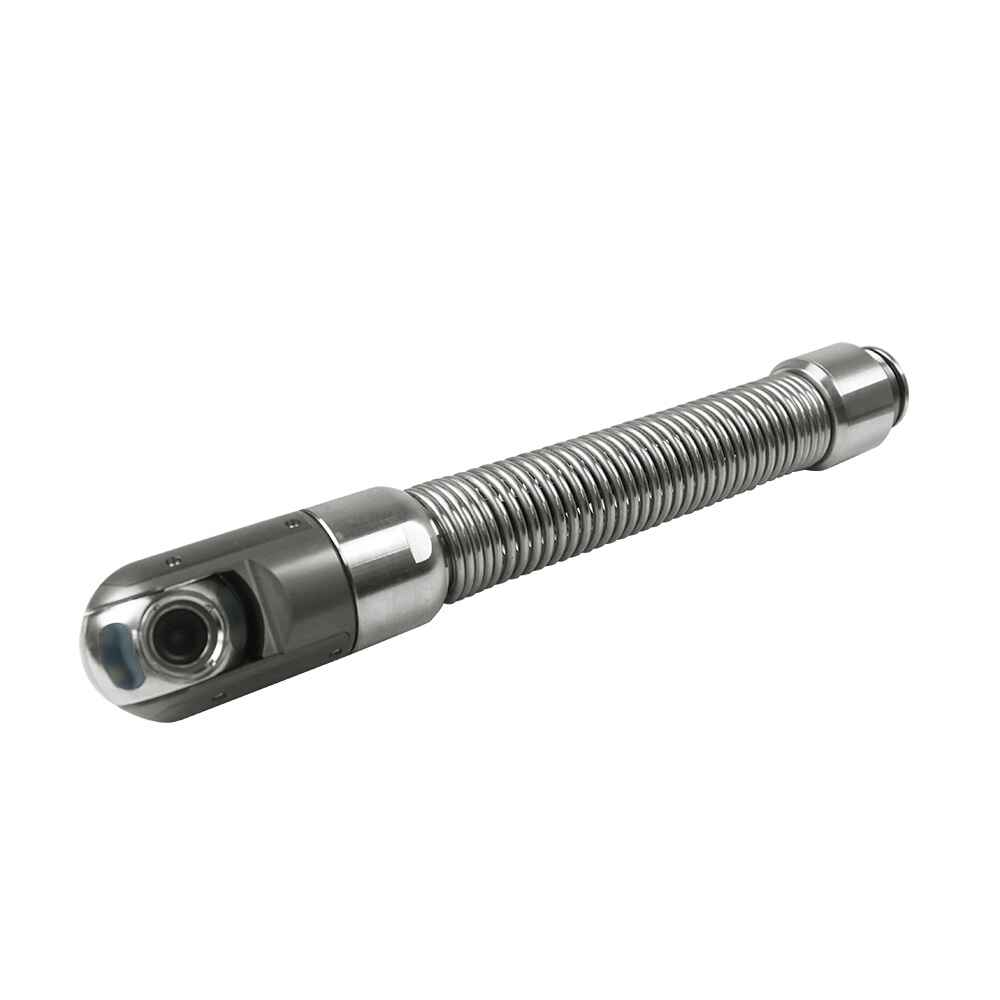
There isn’t one camera head diameter that is ideal for every application. Different sizes are designed for different types of inspection work.
As a general starting point, compact heads around 17 mm are commonly used for smaller drain lines, while approximately 23 mm heads are popular for many 3- and 4-inch applications. Larger heads, such as 25 mm, 30 mm or 50 mm designs, are generally better suited to larger pipes where additional lighting, stability and durability are useful.
|
Camera Head Diameter |
Typical Application |
|
Around 17 mm |
Small drains and tight-access applications |
|
Around 21–23 mm |
Many residential and commercial drain lines |
|
Around 25–31 mm |
Larger drains and sewer lines |
|
Around 50 mm |
Larger commercial and municipal pipe inspections |
These are general guidelines rather than universal limits. The actual performance of a sewer camera depends on the complete camera assembly, cable, fittings, pipe material and inspection conditions.
Choosing a Camera for Inspection of 2-Inch Pipes
Two-inch pipes can be particularly challenging for inspection cameras.
Although a camera head might appear small enough when compared with the nominal pipe diameter, the usable internal opening can be considerably smaller. Bends and fittings can make the route even more restrictive.
For this type of inspection camera small pipes application, a compact camera head can make a significant difference.
A camera around 17 mm in diameter is commonly used for many 1.5- to 2-inch applications because the smaller head provides more room to negotiate bends.
However, camera head diameter isn’t the only factor.
The spring behind the camera, the push rod’s flexibility and the design of the fittings can all affect how far the camera travels. A camera that passes through a straight section may still stop at a tight elbow.
For this reason, contractors working frequently with small drains should look beyond the camera head specification and consider the entire inspection system.
Pipe Camera Diameter vs. Pipe Diameter

One common mistake when selecting inspection equipment is comparing the camera head with the nominal pipe size and assuming that the camera will automatically pass.
For example, a pipe labelled as 2 inches does not necessarily provide a full 2 inches of usable internal clearance. Pipe material, wall thickness, fittings, deposits and deformation can reduce the available space.
This is particularly important when inspecting older drainage systems.
The pipe camera diameter should therefore be considered together with the actual route the camera needs to travel.
A good rule is:
Choose your camera based on the smallest restriction along the inspection route, not just the size of the access point.
If a 4-inch line reduces to a smaller branch farther down the system, the camera must be capable of navigating that smaller section.
Don't Forget About Bends and Fittings

A straight pipe is usually much easier to inspect than a pipe containing several tight bends.
This is where camera head size becomes especially important.
Imagine pushing a camera through a 2-inch drain. The head may have enough clearance inside a straight section, but when it reaches a 90-degree fitting, it needs to change direction.
A larger head has less room to maneuver.
This is one reason why a smaller sewer camera head size can be advantageous when inspecting kitchen drains, bathroom branches, laundry lines and other small-diameter piping.
At the same time, simply choosing the smallest camera available isn’t always the right solution. Smaller cameras can have limitations in larger pipes, particularly when it comes to lighting and keeping the camera properly positioned.
Smaller Isn't Always Better
A common assumption is that a smaller camera head is automatically better because it can enter more pipes.
That’s not necessarily the case.
Camera heads are designed with different applications in mind. A larger head can provide more room for LEDs, electronics and protective components. In a larger pipe, this can help provide better illumination and a more stable view.
For example, putting a very small camera into a large sewer may result in the camera sitting near the bottom of the pipe rather than providing a centered view of the pipe wall.
This is why professional inspection companies may use more than one sewer camera system depending on the size of the pipe.
A compact camera can be ideal for small branches, while a larger camera can provide better visibility in larger lines.
How Camera Head Size Affects Image Quality
The goal of an inspection isn’t simply to get the camera inside the pipe. You also need to obtain footage that allows you to identify defects and document the condition of the line.
A camera head that is too small for a large pipe may have difficulty illuminating the entire area around it.
On the other hand, a camera head that is too large may struggle to move through bends or restrictions.
The right camera for inspection should provide a balance between:
- Accessibility
- Lighting
- Image quality
- Maneuverability
- Durability
- Pipe coverage
For contractors, this balance is often more important than choosing a camera based solely on screen size or cable length.
Consider the Complete Camera Assembly

When comparing sewer camera head size, don’t look only at the metal camera head itself.
The complete assembly may include:
- Camera head
- Spring
- Sonde or transmitter
- Protective housing
- Skid
- Guide wheels
- Cable connection
A protective skid, for example, can increase the overall width of the equipment. Some systems use interchangeable guides or skids depending on the pipe being inspected.
This means a camera advertised as having a certain head diameter may have a larger overall working diameter once accessories are installed.
Always check the manufacturer’s specifications for the complete assembly before using a camera for inspection in a tight pipe.
What About 3-Inch and 4-Inch Pipes?
Three- and four-inch lines are common applications for professional push-camera systems.
A camera head around 21–23 mm is frequently used for these applications because it provides a useful balance between maneuverability, lighting and image quality.
These systems can be useful for inspecting:
- Residential sewer laterals
- Floor drains
- Commercial drains
- Building sewer lines
- Stormwater connections
- Plumbing branches
- Property drainage systems
However, the actual pipe condition should always be considered. Heavy scale, roots, debris, offsets or damaged fittings can make a pipe more difficult to navigate regardless of the camera’s advertised pipe range.
How to Choose the Right Sewer Camera Head Size
If you’re purchasing a new sewer camera, follow these steps before making a decision.
1. Identify the smallest pipe
Determine the smallest pipe that you expect to inspect regularly. Don’t choose the camera based on your largest typical pipe.
2. Consider the access point
Determine where the camera will enter the system. A cleanout, floor drain, toilet opening or other access point may introduce additional restrictions.
3. Check the bends
Think about how many elbows and fittings the camera will need to pass. A camera that works well in a straight pipe may have difficulty negotiating several sharp bends.
4. Check the complete camera diameter
Look beyond the camera head itself. Check the diameter of the spring, sonde, skid and other components that will travel through the pipe.
5. Consider lighting
If you regularly inspect larger pipes, don’t automatically choose the smallest camera. A larger camera head may provide better illumination and positioning in larger lines.
6. Think about the type of work you do
A plumber primarily inspecting small residential drains may have different equipment requirements than a contractor inspecting commercial sewer laterals. Choose your camera for inspection based on the work you actually perform.
Common Mistakes When Buying an Inspection Camera
1. Choosing based only on cable length
A 200-foot or 300-foot cable sounds impressive, but cable length doesn’t matter if the camera cannot negotiate the first few fittings.
2. Ignoring camera head diameter
The camera head is one of the first specifications you should check when buying equipment for small pipes.
3. Looking only at the nominal pipe size
A pipe’s labelled diameter doesn’t tell you everything about the actual space available to the camera.
4. Forgetting about the push cable
A flexible push cable can make a major difference when navigating tight bends, while a stiffer cable may be better for pushing longer distances through larger, straighter lines.
5. Using one camera for every application
There is no single inspection setup that is perfect for every pipe size. Different jobs may require different camera head sizes and cable configurations.
Final Thoughts: Choosing the Right Camera Head Diameter
The right sewer camera head size depends on the pipe, the inspection route and the type of work you perform.
For small pipes, a compact camera head can provide the maneuverability needed to navigate tight bends and restricted access points. For larger pipes, a larger camera may provide better lighting, positioning and durability.
Before purchasing a sewer camera, look at the complete system rather than focusing on one specification. Consider the pipe camera diameter, cable flexibility, camera design, lighting, recording capabilities and the actual conditions of the pipes you inspect.
If your work regularly involves narrow drains, choosing the right inspection camera for small pipes can help you reach areas that larger systems cannot.
At PipeVision Tech, we provide professional sewer camera and pipe inspection equipment for contractors and inspection professionals. Contact our team to discuss the right camera configuration for your application.
Need help choosing a camera for your next inspection? Contact PipeVision Tech to discuss your pipe size, access requirements and inspection needs.